
Take Heart: Courage
Reconnecting with ourselves to remember the way home, the way of courage

By Stefan Chmelik
Insights on thriving in the modern world through the wisdom of Nature and the Vagus Nerve.
4 minute read
I am increasingly drawn towards the concept of courage, as being the vital spark in the possibility for personal transformation. The eminent psychotherapist Francis Weller talks about the importance of courage in alchemising grief and soul work.
Courage - the quality of mind or spirit that enables a person to face difficulty, danger, pain, without fear; bravery. Courage is not the absence of fear; it is not being controlled by fear.
Our story around courage tends to be the one we associate with heroism. My paternal Grandfather, Alfred Wojciech Chmelik, was awarded the Virtuti Militari. The bot tells me: “Alfred Chmelik was awarded the Virtuti Militari Nr 1224, Poland’s highest military decoration, on February 22, 1921.” Awarded for Virtue at War, which does sound a bit like an oxymoron today, the Virtuti Militari is Poland’s highest military decoration, established in 1792, awarded for heroism and courage in war, is the oldest military decoration still in use and is equivalent to the British Victoria Cross and the American Medal of Honor.
I am proud of my grandfather’s heroism, but at the same time I can also wonder what courage means away from the war front.
“Courage is the only lasting virtue” says Ellen Glasgow, 19th century Pulitzer Prize winner.
The word “courage” comes from the Latin word cor, meaning “heart”. Courage originally meant “to speak one’s mind by telling all one’s heart”. And later, the French coeur or heart. To take heart.
In Daoist, Confucian and Buddhist influenced Chinese philosophy, the heart (心 Xin), often translated as heart-mind, “houses” the spirit (神 Shen), ‘flowers’ in the tongue to originate speech and communication, expresses the emotion of joy (乐) and enables the sound of laughter. Xin is within the Fire element, conjuring the image of the flaming heart. The Xin is credited with thinking si 思, understanding míng 明, knowing zhi 知, intention zhi 志, felt moods and/or emotions qing 情, and desire yu 欲. Xin plays a central role in Chinese ethics, epistemology, and metaphysics
Courage Over Comfort
We live in a society where bravery and courage are not norms but comfort and convenience are. Comfort and convenience are short-term benefits with an extremely high long-term cost. Brené Brown says “I think the people who wade into discomfort and vulnerability and tell the truth about their stories are the real badasses in this world.” To Nelson Mandela, courage was not the absence of fear but the triumph over it. He defines a brave person as someone who conquers their fear rather than someone who doesn’t feel afraid at all.
In the Classical world, Aristotle said that courage “is a (balanced) mean with regard to feelings of fear (phobos) and confidence (thrasos)”, that a courageous person not only fears rightly, but also is confident about the right things, in the right way, and at the right time, emphasising a rational and steady approach to life’s challenges.
Θάρρος thárros
The most common Ancient Greek words for courage are ἀνδρεία (andreia), meaning manliness (we’re talking Sparta here), prowess, bravery, valour, courage, stoutness, stalwartness and courage, and θάρσος (tharsos), which refers to boldness, confidence, mettle, guts, nerve, heart, spunk and courage, sometimes with a nuance of recklessness. While andreia is rooted in the concept of a man’s bravery, tharsos and its related verb tharseō (to be courageous) can be more broadly applied to confidence and fearlessness.
The Greeks believed your thymus, which sits just above the anatomical heart, was home to your soul. In fact, thymus means ‘soul’ in Greek (also ‘psychē’), perhaps named because the gland looks like the leaves of thyme herb or perhaps because the organ is near the heart.
In ancient Greek thought, Psychē represents the essence of a person, encompassing life-force, personality, and intellect, while Thymos refers to the seat of emotions like passion, courage, and moral indignation, acting as a psychological muscle aiding reason in controlling desires.
I’m learning about the Elder Futhark Runes with druid, ecotherapist and archaeologist Harriet Sams. Rune two is Uruz, generally meaning Auroch, the original now extinct giant bovine but also stamina, strength and courage…
Musing about the relationship to the hidden price of modern farming practices and their monochrome legacy, Landlines and Salt Path author Moth Winn asks “What if we have a dream and the courage to make it real.”
In Restoring the Kinship Worldview (2022), Wahinkpe Topa and Darcia Narvaez put the following as the number two requirement in moving away from what she refers to as the dominant hierarchy: “from fear-based thoughts and behaviours to courage and fearless trust in the universe.” (“from rigid hierarchy to non-hierarchy” is top). Narvaez also lists “from aggression as highest expression of courage to generosity as highest expression of courage”
Rollo May was an influential figure in humanistic psychology with a particular interest in anxiety, love, creativity, and violence: “Normal anxiety confronts the developing person and it is in confronting rather than fleeing this that courage is essential. Courage is the basic virtue for everyone so long as he continues to grow, to move ahead.”
May refers to this courage as ‘the virtue of maturity’. Always necessary for growth, in an age of anxiety, courage is essential. May suggests, in 1953, that the tendency has always been to ‘relegate courage to the old fashioned virtues, or perhaps useful for adolescent sports or soldiers’. But we can ‘bypass courage’ only by supressing awareness of death, by assuming that happiness and freedom were automatic and loneliness, anxiety and fear are neurotic behaviour and can be overcome. May says the opposite of courage is not cowardice, but what he calls ‘automation conformity’.
Poetry, which like music and song is a form of story, is one of our best tools to connect with ourselves and remember the way home, the way of courage:
Then the delight, when your courage kindled,
And out you stepped onto new ground,
Your eyes young again with energy and dream,
A path of plenitude opening before you.
John O’Donohue from For A New Beginning
Blessing from O’Donohue:
“May vision be granted to you to see this with the eyes of providence. May your loss become a sanctuary where new presence will dwell to refine and enrich the rest of your life with courage and compassion.”
“May I have the courage today, to live the life I love, to postpone the dream no longer, but do at last what I came here for, and waste my heart on fear no more”
Blessings to you and those you love.
About Stefan & online appts
Stefan Chmelik is co-founder of and inventor of the Sensate stress reduction system. Founder of New Medicine Group in Harley Street and founder of immersive retreat provider Nature Awaken
If you like what I write pls subscribe for free as this helps spread the message

Silent Space with Stefan
Wednesday at 4pm UK I sit in silence for 20 minutes. Anyone is welcome to join

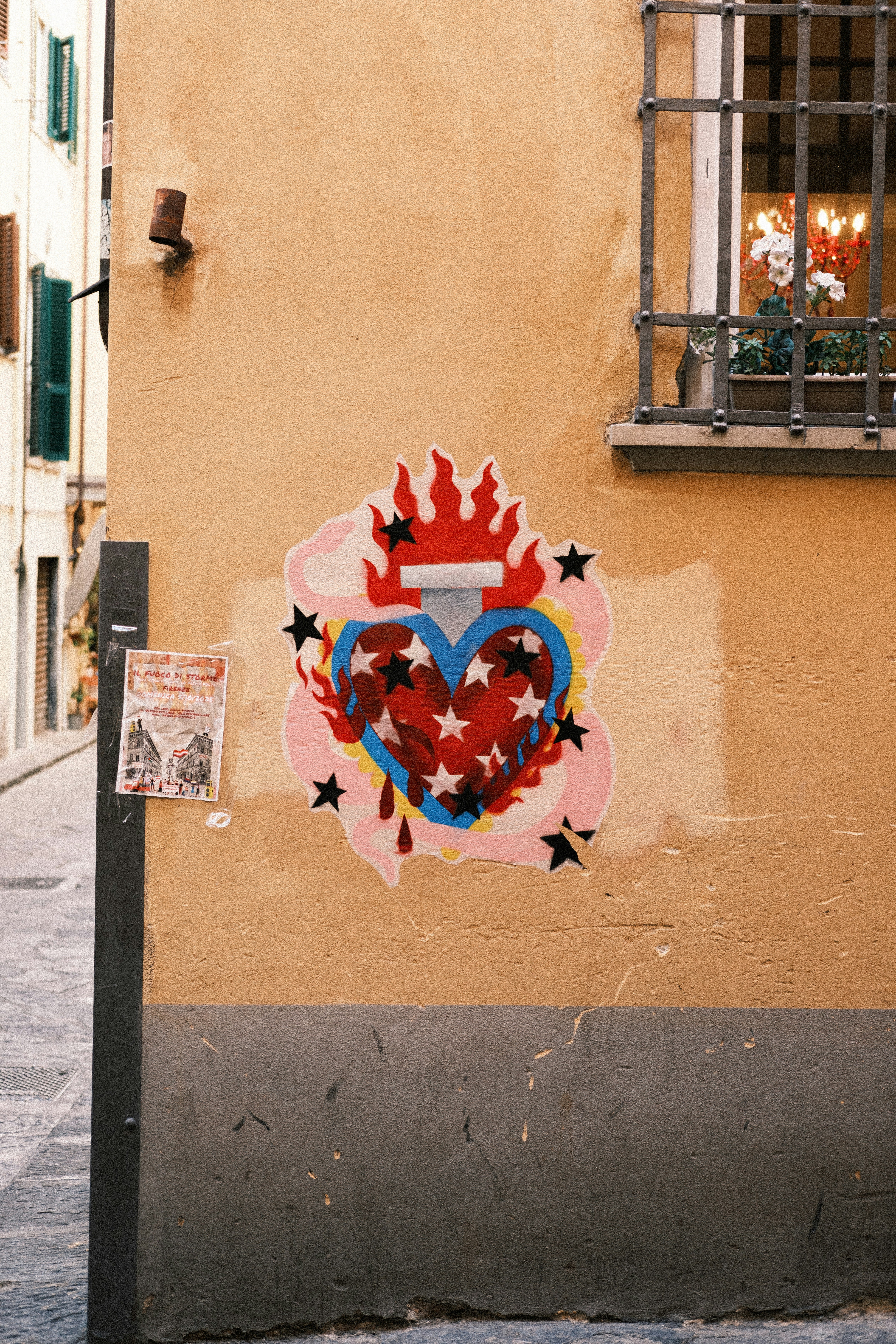
Photo credits:
Benjamin Davies
Jonah Townsley
Nicely put, thank you Ollie
Fantastic Allegra and good luck with the talk!