
Pure Imagination
There is no place I know…

By Stefan Chmelik
Read time: 7 minutes
In this article I describe why imagination is so vital and how you can increase it, even when you think you don’t have one…
Insights on thriving in the modern world through the wisdom of Nature and the Vagus Nerve
If you like what I write pls subscribe for free as this helps spread the message
“If you can paralyse someone’s imagination, the rest is a formality”
Martin Shaw
Being able to think of something that doesn’t yet exist may be the most unique of human attributes, almost certainly more than any other animal. Because humans can imagine turning clay into a pot, wood into a wheel or shapes into art or letters, we can imagine anything even if it doesn’t exist yet.
The power of imagination is beyond numbers and measurement, and therefore more powerful and fundamental than the sciences, which become a useful way to measure the things we imagine, be that agriculture, gravity or interplanetary travel. Imagination, and therefore art, is just as important as numbers.
“Sadly, through unimaginative education, entertainment and religion, egocentric culture has suppressed and deflected the deep imagination.” Says Bill Plotkin: “And yet, the muse or dreamer waits within everyone to be reclaimed as an indispensable resource for liberating ourselves from the flatlands and wastelands of the mainstream and for designing and building new life enhancing societies.”
Imagination and health
A healthy imagination is not simply some utopian notion. There are serious health implications to a dulled imagination, personal as well as for society – and is the idea of aphantasia really what it is described as?
Reduced or no ability to imagine can have a negative impact on mental health in particular. Research from the National Institute of Mental Health has shown that individuals with higher levels of imagination tend to have better overall well-being. They are more likely to experience positive emotions, have lower levels of stress, and have better coping mechanisms when faced with challenges. So, the obvious question is how can one improve their imagination for better wellbeing?
Engaging in activities that enhance imagination and stimulate creativity, such as art, music, or writing, can help to exercise the imagination. Additionally, practicing mindfulness and meditation can help individuals to tap into their inner creativity and imagination.
Aphantasia is defined as people who don’t have a ‘minds eye’; who find it difficult or seemingly impossible to visualise vivid imagery. Neuroscientists estimate that some 3% of humans ‘have’ aphantasia. I’m not sure this is truly accurate description of human experience though. Imagination is entirely subjective, and neuroscientists dislike this – you could research the arguments around consciousness to dive into how challenging this is for a neuroscientist (my article on Consciousness). The more recent neuroscience focus on ‘what is consciousness’ throws this perspective into further relief.
Clearly some people find it easier to visualise things in their minds eye than others. Many people easily describe themselves or have been told they ‘can’t’ draw, sing, write, imagine – but this is not my experience of working with people over many decades, where I have found that embracing and increasing the imagination muscle is both possible and essential in living a fulfilled life.
“The “mind’s eye” refers to the faculty of imagination and visualization. It’s the ability to create mental images, recall past experiences with vivid detail, and envision future possibilities. More than just seeing images internally, it encompasses a complex interplay of senses, emotions, and memories that paint a holistic picture within our minds.”
Warren Boutin, July 25, 2025 SciFi Dimension
Science fiction continues to gain respectability, although it still struggles to be seen as more than fantasy by some. In reality, science fiction may be one of our most powerful tools for understanding the future.
Hannah Arendt in The Human Condition, refers to the launch of Project Orbiter, the first practicable satellite launching project in 1954:
“Science has realised and affirmed what men anticipated in dreams that were neither wild nor idle. What is new is only that one of this country’s most respectable newspapers finally brought to its front page what up to then had been buried in the highly non respectable literature of science fiction, to which unfortunately nobody has yet paid the attention it deserves as a vehicle of mass sentiments and mass desires.”
“Imagination is the only weapon in the war against reality”
Lewis Carroll
In The Spell of the Sensuous (1997): Perception and Language in a More-Than-Human World, philosopher, cultural ecologist and a proficient slight-of-hand magician David Abram highlights the cultural differences between indigenous and technologically developed countries in what they think they mean by ‘the living world’: those in the Global North tend to think of ‘spirits’ as something in humanoid form but supernatural in some way; indigenous peoples tend to view themselves as simply being ‘within’ the web of life and not beyond it.
‘For a thousand generations, human beings viewed themselves as part of the wider community of nature, and they carried on active relationships not only with other people with other animals, plants, and natural objects (including mountains, rivers, winds, and weather patterns) that we have only lately come to think of as inanimate. How, then, did humans come to sever their ancient reciprocity with the natural world?’
“The deep imagination is also our primary resource for recognising the emerging future, for seeing the visionary possibilities of what we can create right now individually and collectively and consequently for creating a better world. It is our essential resource for all genuine human creativity.”
Bill Plotkin, Wild Mind
His Dark Materials author Philip Pullman notes:“Most people feel that imagination is making things up… what we do when we imagine something is not to make it up, but to see it. It’s not making things up. The distinction between imagination and fantasy was a very important one for Samuel Taylor Coleridge… he made a distinction between true imagination, which is founded in some sort of reality, and fantasy, which does adding one bit of something onto something else.”
Pullman interviewed by Michael Sheen after reading The Book of Dust vol 3: The Rose Field.
Will AI ever be more creative than humans?
A new study argues that AI can never be more creative than humans, and many experts argue that AI’s output will only ever be as good as its input with the supposed “creativity” of artificial intelligence (AI) subject to strict mathematical limits, according to a study from Nov 2025.
Is it possible that the data Cloud and AI availability are in fact a Dark Age, due to lack of or inability to embody the data, rather than a lack of data itself? asks Josh Schrei, a man who understands the impact of myth and Sci-Fi on the popular and the development of culture, paints a picture of a near future world, where a generation of humans brought up on AI enhanced interfaces, have not had to embody any knowledge, and therefore have not developed any of the somatic senses or knowledge that is easily taken for granted. (Schrei notes the inaccuracy of the idea in The Matrix that a BodyMind skill (“I know Kung Fu”, says Neo) is a matter of just data that can be downloaded into the brain, because hey, the brain controls the body right?
Michael Meade refers to the term AI, calls itself as ‘inauthentic intelligence’.
“In the dark times we have to look for the light somewhere other than in the mainstream of life” he says
Practical - How to grow your imagination:
I have already mentioned engaging in activities that enhance imagination and stimulate creativity, such as art, music, or writing, can help to exercise the imagination.
Another rich source of the imaginal are your dreams – practice writing or drawing them, using pen and paper, as this involves the fine motor skills (and maybe therefore body/fascia memory) and enables closer connection with imagination and creativity. The more you notice your dreams, the more they you will notice them
Can I improve imagination?
Yes you can, even when you have been told you don’t have one!
Because scientists love to try and translate the subjective into numbers, a scale has of course been created to attempt to measure imagination. Here are four scenarios adapted from the Vividness of Visual Imagery Questionnaire (VVIQ).
Visualise a rising sun. Carefully consider the picture that comes before your mind’s eye:
1. When the sun rises above the horizon into a hazy sky;
2. When the sky clears and surrounds the sun with blueness;
3. When clouds appear and a storm blows up with flashes of lightning;
4. When a rainbow appears.
Then rate each of the four images you formed, if any, on the following scale:
Perfectly clear and as vivid as real life = five
Clear and reasonably vivid = four
Moderately clear and lively = three
Vague and dim = two
No clear image at all, you only ‘know’ that you are thinking of the object = one
A score of four out of 20 suggests aphantasia, or difficulty in visualising mental images.
A score of 20 might point to hyperphantasia, the ability to ‘see’ incredibly vivid mental imagery, often as detailed as an actual vision.
Most of us will score in the low to mid teens for these four examples.
Exercises can be used to increase score in people with low scores.
Note that the terms aphantasia and hyperfantasia are highly pejorative (derogatory or discriminating) terms that only really make sense in the world of brain imaging.
How do we imagine and create the future we want?
We need true adults - “Where do true adults come from? From healthy adolescents who have been supported by elders and adult initiation guides through the process of soul initiation. Where do healthy adolescents come from? From ecocentric soul-centric communities and families that include parents and others who are true adults and elders.”
Bill Plotkin in Wild Mind. He goes on to say “mature cultures come from nature, from natures deep imagination.”
My approach: why imagination is your superpower and path to wellbeing
I have been doing a lot of Soil and Microbiome healing visualisations with clients over the year, using imagination to dissolve the fractured relationship we have with the land, and it feels clear that this is related to this concept of traversing. A healthy human microbiome should be contiguous with the ecobiome, the totality of the biome of the Earth. When this connection is severed, symptoms arise. Methods like this are a great way to ignite the imaginal realm.
Deep Nature is the richest source to reignite your deepest imaginative powers. Something like the annual Nature Awaken Retreat is designed to support this process:
The realm of the imagination is the realm of the classic Hero’s Journey story, but with special resonance for these times, where those who ask whether there might be a different way have their mental health questioned by the people who hold the balance of power.
Perhaps we need stories now more than ever. Stories are what make us human, and it is through telling and re-telling these stories that we can see that different is possible, and that in the end, imagination is humanity’s greatest superpower.
Data doesn’t invent things, imagination does; science and technology will not save the human race without the influence of imagination to tell us how the story can end.
Let’s continue to tell the stories and imagine how the future could be…
A song to imagine by - In the Dark Times
A Bertold Brecht poem with additional lyrics and put to song
Blessings to you and those you love.
About Stefan & online appts
Stefan Chmelik is co-founder of and inventor of the Sensate stress reduction system. Founder of New Medicine Group in Harley Street and founder of immersive retreat provider Nature Awaken
If you like what I write pls subscribe for free as this helps spread the message.
Refs:
https://healthdor.com/article/the-impact-of-lack-of-imagination-on-mental-health
The Emerald podcast, All my Lessons Come in the Form of Sound, Oct 2023
VVIQ https://davidfmarks.net/vividness-of-visual-imagery-questionnaire-vviq/
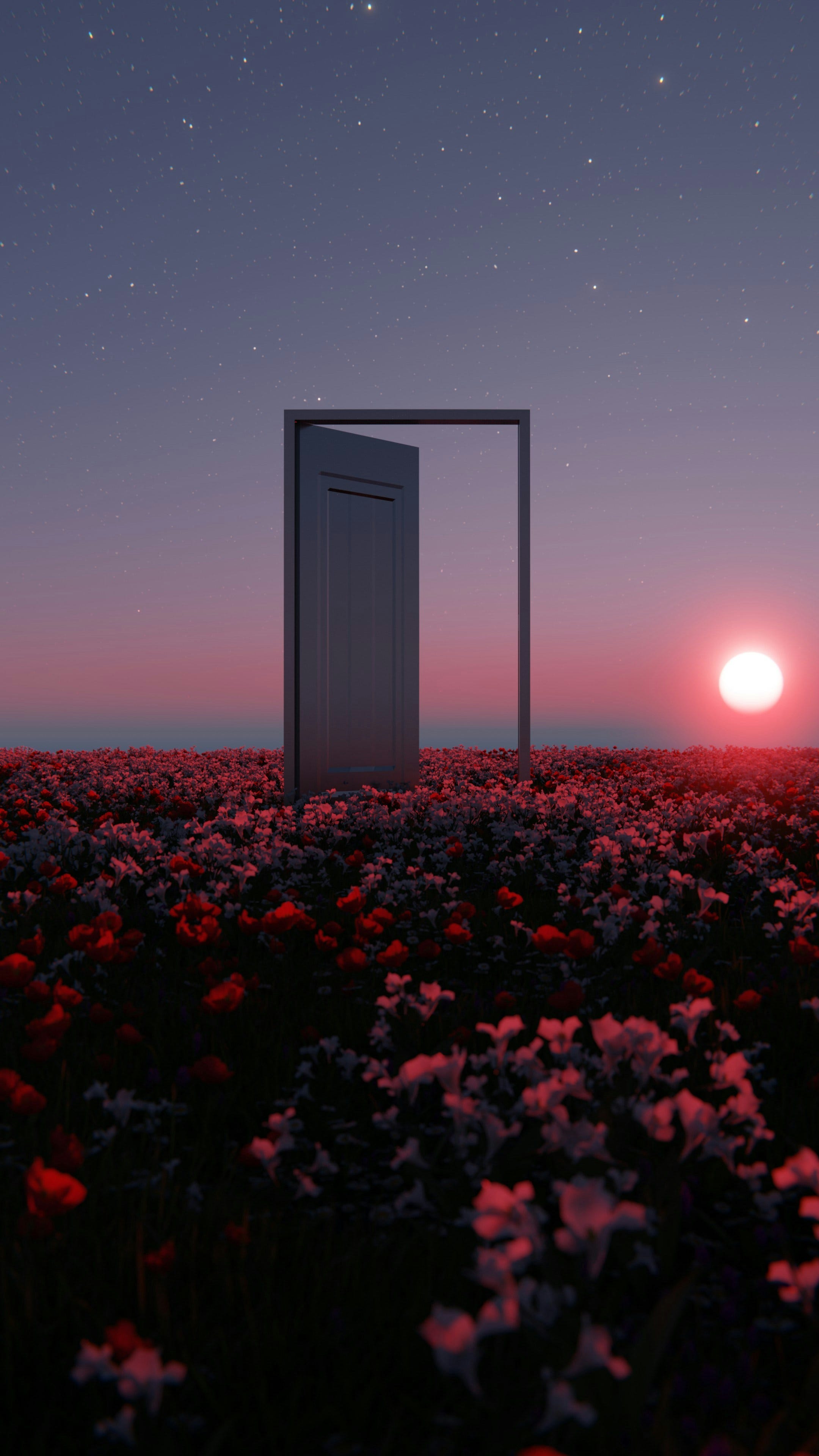
Photo credit: Icarus
Thank you for the comment Inactivist.
Do you read/like scifi?
Just an ironic note, since you touch on AI & creativity:
You quote Warren Boutin from Scifi Dimensions - a site which is nothing but pure AI slop. If it's not clear enough from the content & rampant hallucinations, the fact that one author managed to write 500k articles in under five months could be a subtle hint.
Well, either that, or he's one hell of a quick typist. And maybe has a few dozen extra arms to help. Would've made a great secretary.